Pest control service in Phoenix addresses extreme environmental pressures across Maricopa County, where sustained summer heat exceeding 115 degrees and sudden seasonal monsoons drive venomous arachnids and destructive rodents directly into conditioned residential structures. Properties bordering natural Sonoran Desert corridors, mountain preserves, and agricultural irrigation grids require calibrated chemical barriers, specialized mechanical exclusion, and direct nest eradication rather than generic surface sprays.
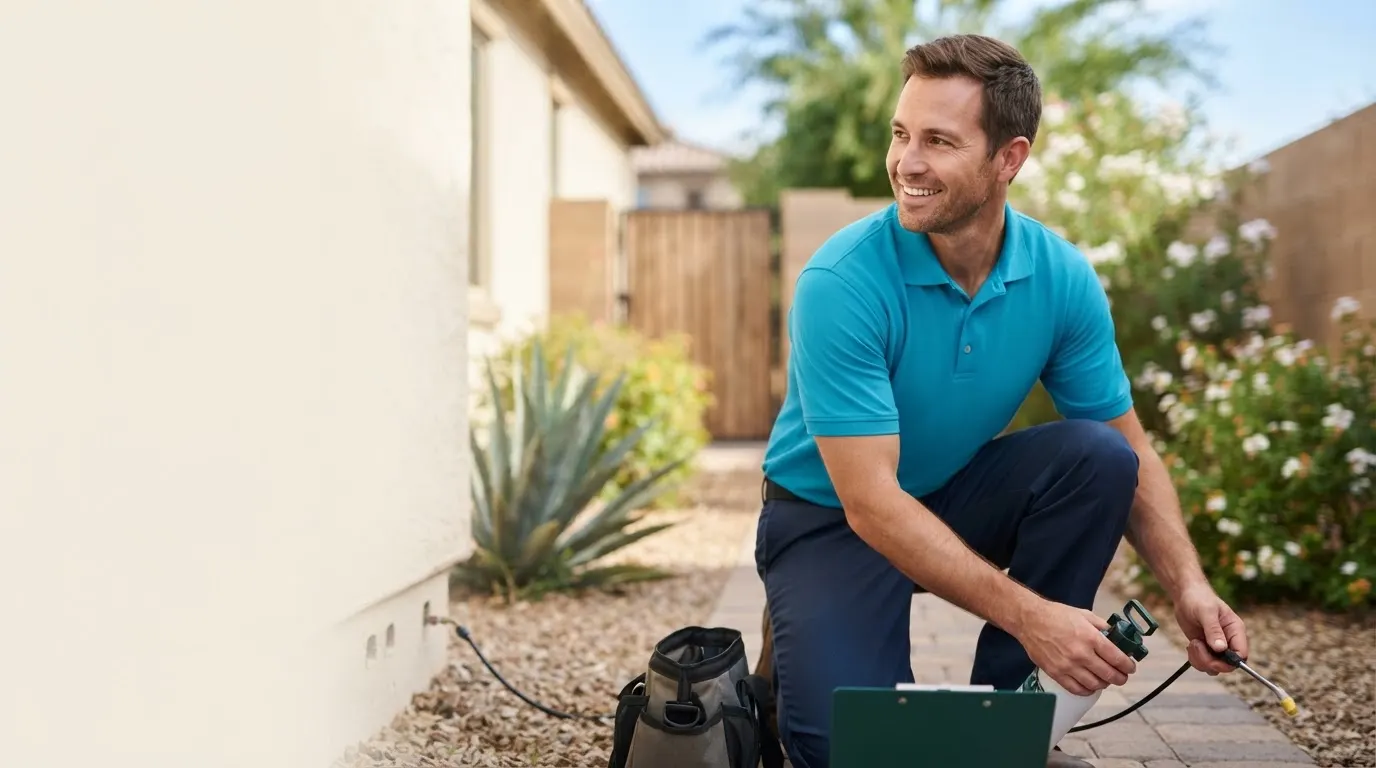
Pest control service in Phoenix is a specialized barrier application, structural exclusion, and targeted extermination service that eliminates desert-adapted insects, venomous arachnids, and wood-destroying organisms from residential and commercial properties.
Every service reflects the same meticulous attention to detail, whether it's a single job or a larger pest control service project across Phoenix.
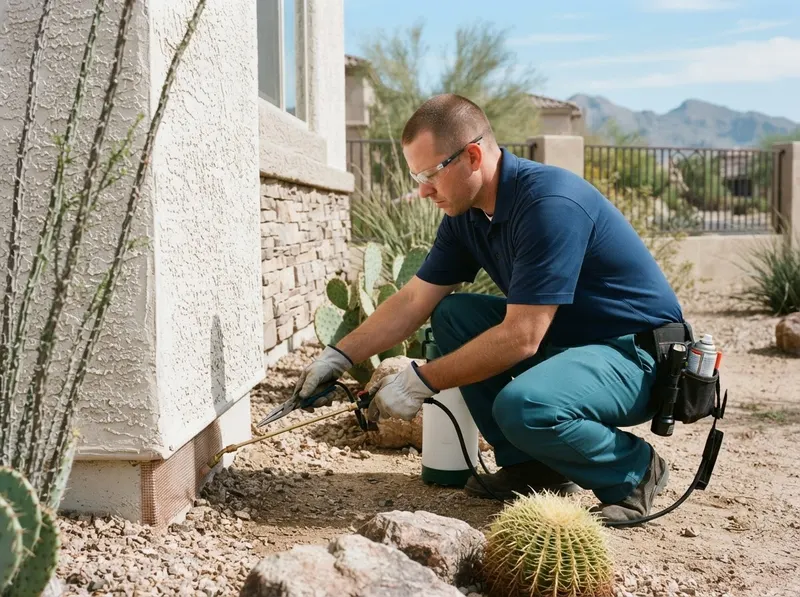
Scorpion management establishes an impenetrable defense perimeter utilizing microencapsulated synthetic pyrethroids engineered specifically to withstand intense ultraviolet degradation on hot concrete stem walls, travertine decking, and exterior stucco finishes. Application procedures encompass complete perimeter block wall footings, foundation expansion joints, structural weep screeds, and external vertical walls up to three feet above grade. Technicians perform interior socket dusting using non-conductive silica dust, inspect and clear attic micro-voids, and apply physical brass mesh or copper wire mesh across exterior weep screeds and plumbing penetrations to prevent bark scorpions from navigating through exterior walls into bedrooms and living spaces.
Get a quote →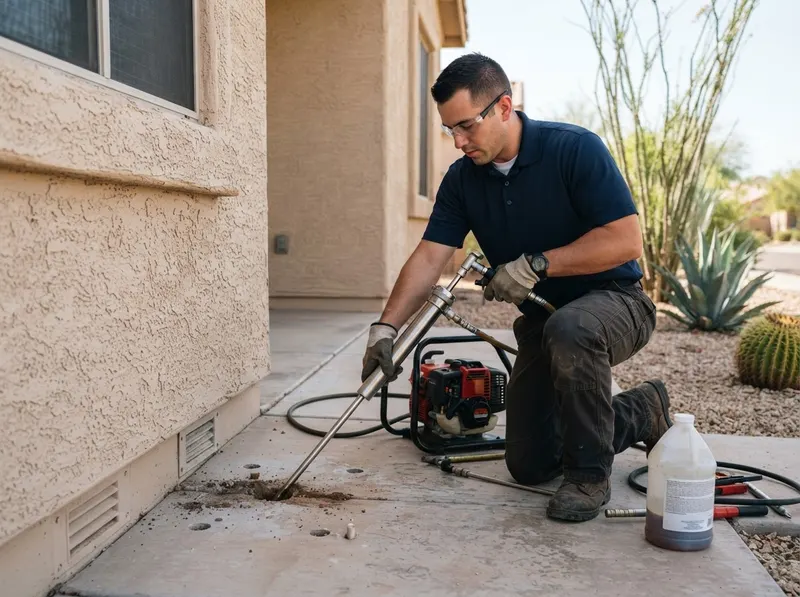
Subterranean termite remediation isolates residential foundation footings using continuous soil trenching and deep-rod non-repellent liquid termiticide injection along perimeter stem walls. Technicians drill structural expansion joints, garage apron slabs, and adjacent exterior concrete patios at precise 12-inch intervals to reach sub-slab nesting zones, saturating the subterranean substrate to form an unbroken chemical barrier. For properties constructed with sensitive post-tension cable slabs or extensive travertine stone flatwork, specialized baiting stations are placed every 10 to 15 linear feet around the foundation perimeter to eliminate subterranean colonies through continuous consumption and transfer of insect growth regulators before structural structural framing sustains wood-destroying damage.
Get a quote →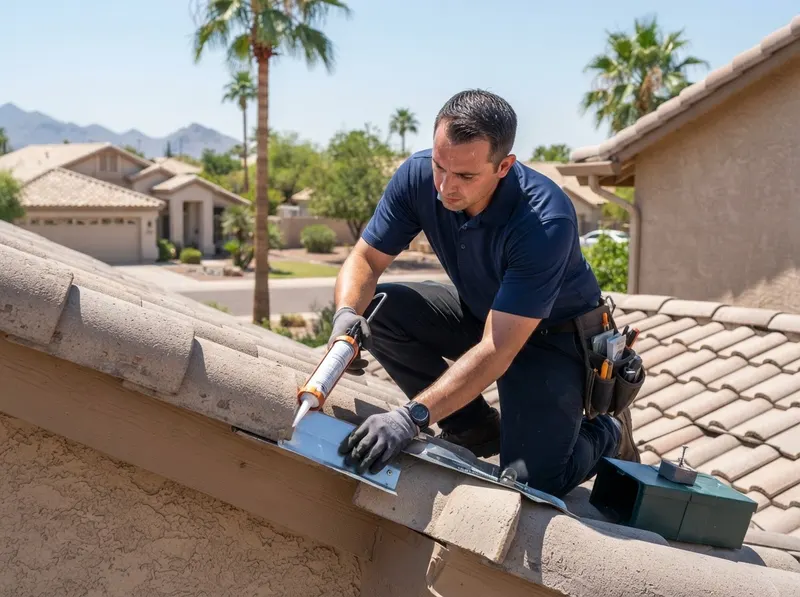
Roof rat mitigation resolves rodent colonization across concrete tile roofs, blown-in attic insulation, and dense palm tree canopies through permanent physical sealing and population eradication. Technicians install heavy-gauge 1/4-inch galvanized steel hardware cloth over attic gable vents, uncapped plumbing roof jacks, air conditioning chase lines, and open barrel-tile roof eave gaps. Interior attic runs are cleared using commercial mechanical snap traps baited with non-allergenic attractants, followed by the strategic deployment of anchored, tamper-resistant exterior rodent bait stations along property fence lines to systematically eliminate foraging exterior populations before they access structural rooflines.
Get a quote →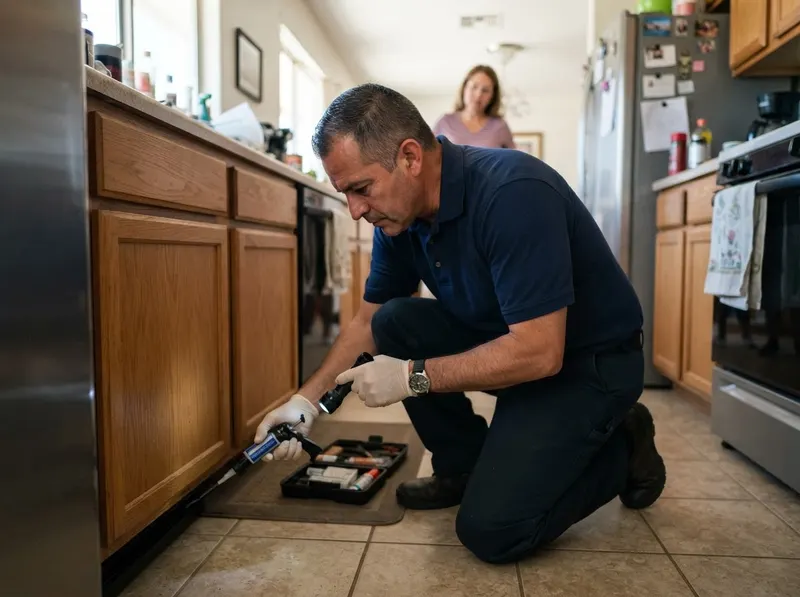
Cockroach eradication utilizes insect growth regulators (IGRs), non-repellent perimeter suspensions, and specialized micro-bait formulations placed deep inside utility chases, electrical breaker panels, and hollow baseboard crevices. Turkestan cockroaches infesting water meter vaults, perimeter masonry expansion joints, and landscape irrigation valve boxes are targeted via exterior soil drenches, granular baits, and power-sprayed foundation perimeter bands. German cockroach interior infestations receive comprehensive vacuum extraction, crevice baiting with targeted fipronil or indoxacarb gel matrices, and wall-void dusting to eliminate egg cases and halt nymph reproduction cycles.
Get a quote →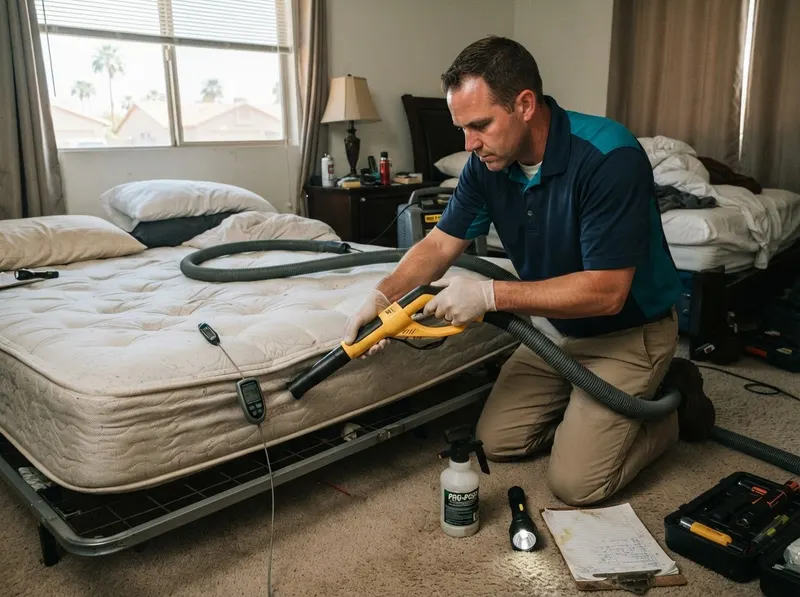
Bed bug intervention combines precision chemical residual application, desiccant dust injection, and high-output dry steam remediation to eliminate all developmental life stages from eggs to mature adults. Structural baseboard voids, mattress tufts, box spring perimeters, bed frames, electrical wall plates, and adjoining furniture joints are treated with modern non-pyrethroid active chemistries to bypass documented insecticide resistance. Properties receive comprehensive pre-treatment preparation checklists, specialized mattress encasements, and mandatory 14-day secondary follow-up inspections to ensure complete eradication across all treated living spaces.
Get a quote →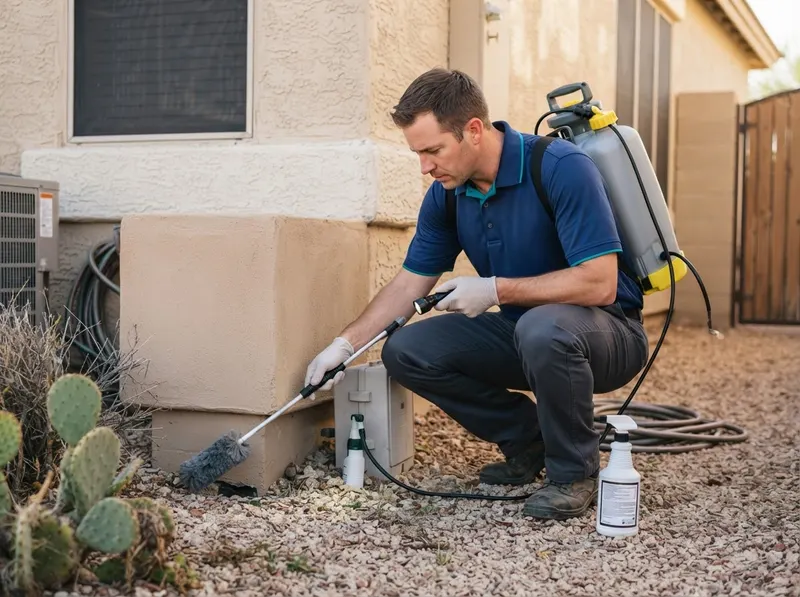
Spider management targets dangerous web-building and hunting arachnids, including Western black widows and desert recluse varieties, nesting inside hollow block wall cores, utility enclosures, garage corners, and covered patio overhangs. High-reach web-removal brushes sweep away active webbing while simultaneously applying micro-fine pyrethroid or silica dust into exterior corners, eaves, soffits, and window framing joints. Ground-level perimeter barrier applications eliminate secondary insect food sources such as crickets and beetles, depriving hunting spiders of sustained prey and preventing territory re-establishment.
Get a quote →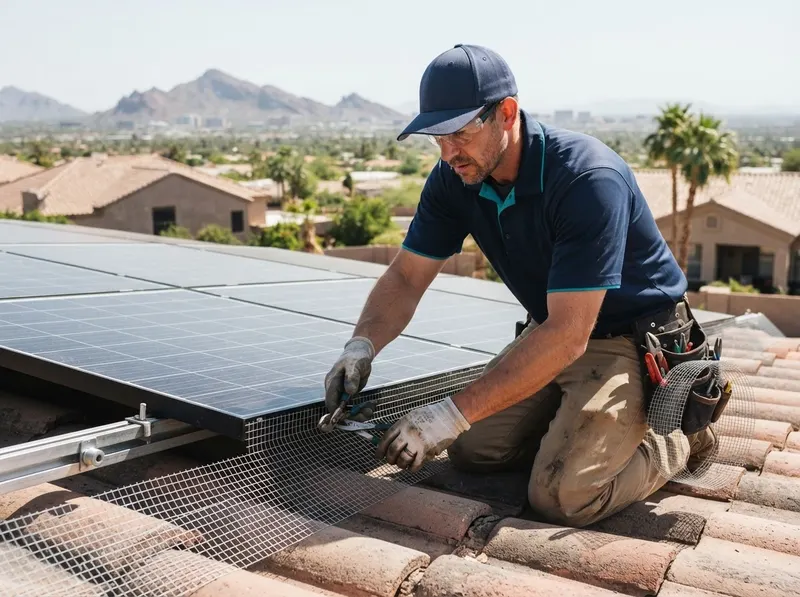
Pest bird mitigation prevents feral rock pigeons from roosting, nesting, and accumulating corrosive droppings beneath residential rooftop solar panel arrays and architectural parapet ledges. Technicians install heavy-duty black PVC-coated galvanized steel bird mesh fastened with non-penetrating solar panel clips around the complete array perimeter without voiding manufacturer roof warranties. Roosting ledges and roof peaks receive UV-stabilized polycarbonate bird spikes or low-profile tension wire systems, followed by complete biological sanitation and multi-stage enzyme washing to neutralize toxic acidic waste and airborne fungal spores.
Get a quote →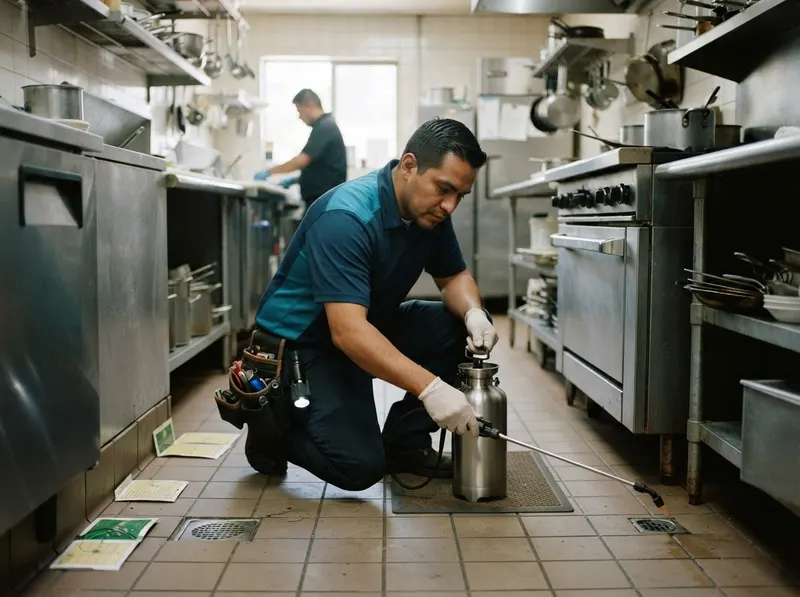
Commercial pest management defends food handling establishments, hospitality venues, and distribution warehouses in accordance with Maricopa County Environmental Services Department sanitation codes and third-party audit benchmarks. Program implementations encompass biological drain foaming using bio-enzymatic concentrates to digest organic grease and fruit fly breeding biofilms, electric fly-light trap placement, interior insect monitoring traps, and non-food-contact perimeter crack-and-crevice injections. Comprehensive digital service logs, safety data sheets, and pest activity trend analysis documentation are provided following every inspection interval.
Get a quote →You get a firm, itemized quote for your pest control service before any work begins, no surprises, no pressure.
Careful prep, tidy work, and a full cleanup when we are done. We treat your home and belongings like our own.
The same trusted, background-checked team from the first call to the final check.
Selecting appropriate pest defense requires matching treatment chemistry, mechanical exclusion techniques, and service frequencies to specific target species, soil conditions, and architectural construction types. If structural framing or foundation stem walls display active mud shelter tubes, structural timber hollows, or subterranean swarmer wings along expansion joints, choose comprehensive non-repellent liquid termiticide trenching rather than localized topical sprays; non-repellent liquid termiticides allow subterranean worker termites to unknowingly travel through the treated chemical zone and transfer lethal active ingredients across the entire colony via mutual grooming, whereas topical repellent sprays merely scatter workers into untreated structural voids. If nocturnal inspections reveal bark scorpions along concrete block fence lines, stone rip-rap, or interior baseboards, select microencapsulated synthetic pyrethroid perimeter barrier defense paired with physical weep-screed mechanical exclusion rather than generic fine-mist broadcast fogging; microencapsulated polymers shield active ingredients against breakdown from intense desert ultraviolet radiation and sustained 115-degree ground temperatures, adhering directly to the scorpion's waxy epicuticle, while standard water-soluble liquid sprays degrade within 72 hours of direct sun exposure.
If citrus trees, unskinned palm canopies, or attic insulation harbor nesting roof rats, choose multi-point physical exclusion using 1/4-inch galvanized steel hardware cloth combined with tamper-resistant exterior rodent bait stations instead of interior snap traps alone; mechanical exclusion permanently blocks vulnerable high-level roof tile junctions, plumbing stacks, and attic vents, whereas relying solely on interior snap traps leaves open building breaches that invite continuous structural re-infestation. If utility boxes, water meters, and exterior decorative rock beds display heavy Turkestan cockroach activity, choose micro-granular insect baits combined with targeted botanical perimeter drenches rather than indoor aerosol treatments; exterior granular baits intercept populations at their outdoor breeding reservoirs, preventing structural intrusion before nymphs penetrate threshold weatherstripping. The fundamental operational trade-off centers on upfront mechanical labor versus continuous chemical reapplication: physical structural sealing requires higher initial financial and labor investment but permanently reduces ongoing chemical dependency across building envelopes, whereas regular exterior perimeter barrier maintenance protects expansive outdoor acreage at lower immediate cost but requires unbroken quarterly replenishment to prevent chemical degradation under severe Maricopa County climate conditions.
Every project gets a firm, written price after a free on-site visit. Ranges below for orientation.
Tell us about your pest control service job and we'll send a clear, written quote, usually the same day. Or just call and talk to a real Phoenix pro.
(480) 243-9476
Phoenix residential and commercial structures face intense environmental pest pressures shaped directly by caliche-dense clay soils, extreme solar radiation indexes, and the expansive network of agricultural canal systems managed by the Salt River Project. Neighborhoods bordering Camelback Mountain, Piestewa Peak, and the South Mountain Park and Preserve experience severe bark scorpion and roof rat migrations as native Sonoran Desert wildlife corridors intersect with artificially irrigated residential landscaping. In historic districts such as the Willo Historic District, Coronado, and mature corridors across North Central Phoenix and Maryvale Terrace, regular residential flood irrigation schedules saturate sub-surface clay soils; this sustained subterranean moisture creates ideal breeding conditions for massive Western subterranean termite colonies and Turkestan cockroach populations that exploit foundation settlement cracks, red brick mortar joints, and unsealed floor penetrations. Modern developments throughout Desert Ridge and the Ahwatukee Foothills frequently face aggressive scorpion displacement as heavy land grading disturbs natural underground desert rock strata, driving displaced populations directly toward the perimeter weep screeds of newly completed stucco slabs.
Free estimates for Phoenix & the surrounding area.
 PestWatch Pest Control